★★★★★ Rated Excellent on WhatClinic
Chin Augmentation
in Turkey
- Surgical and non surgical chin enhancement options
- Focus on facial balance and profile harmony
- Long lasting and predictable surgical results
- Full guidance and support for UK patients
Chin Aesthetics in Turkey for UK Patients
A medical approach to lower facial harmony
The chin has a significant influence on how the face appears in profile and from the front. Even a small deficiency in chin projection can affect facial balance, making the nose or midface appear more prominent.
Chin augmentation aims to restore proportion rather than exaggeration. Treatment planning considers the relationship between the chin, lips, nose, and jawline to achieve a natural and balanced outcome.
Understanding Chin Augmentation (Mentoplasty)
Chin augmentation is a cosmetic surgical procedure performed for patients whose chin is positioned too far back or lacks adequate projection relative to the rest of the face.
Chin enhancement may be performed using:
- Silicone chin implants
- Sliding genioplasty
- Dermal fillers for temporary correction
In clinical practice, chin augmentation is most commonly performed using silicone chin implants due to their predictable shape, stability, and long term results.
Setting Realistic Expectations
Chin augmentation aims to improve facial balance, not to create an exaggerated or unnatural appearance.
The degree of change depends on facial anatomy, dental occlusion, and overall profile. Clear discussion before treatment ensures expectations are realistic and outcomes are aligned with the individual facial structure.
Who Is Suitable for Chin Augmentation
Chin augmentation may be suitable for patients who:
- Have a weak or recessed chin
- Have a chin that appears small relative to facial proportions
- Have normal dental occlusion
- Wish to improve profile balance and lower facial harmony
Suitability is always confirmed through a full facial and medical assessment.
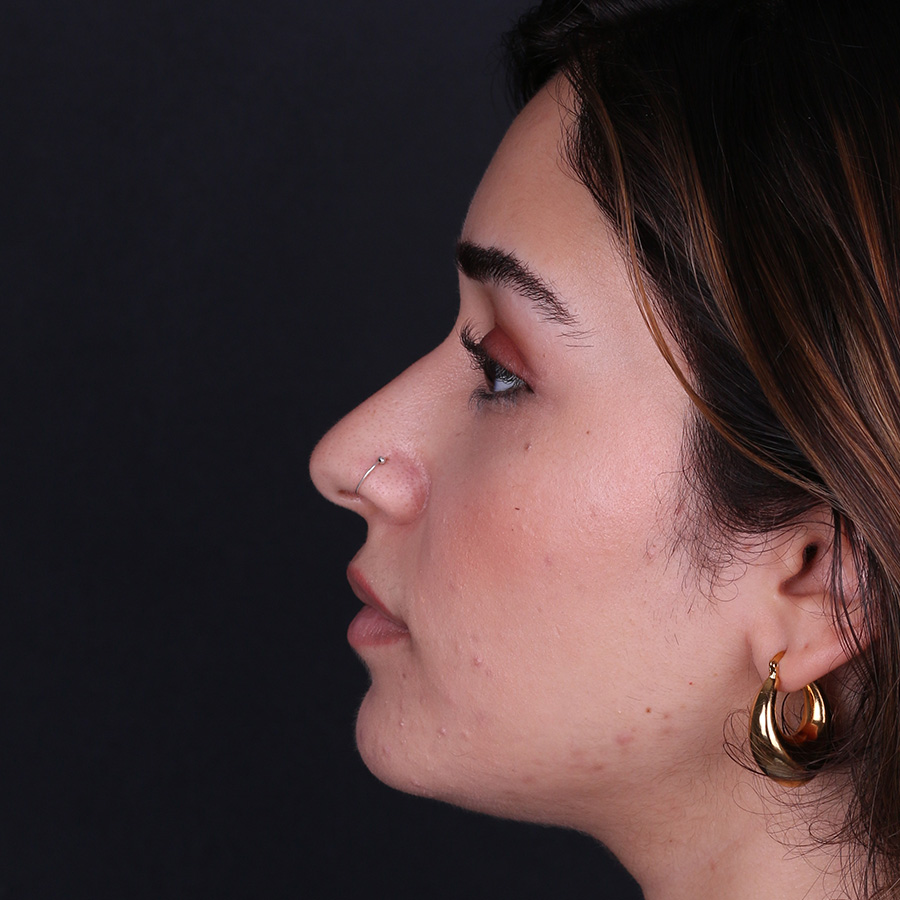
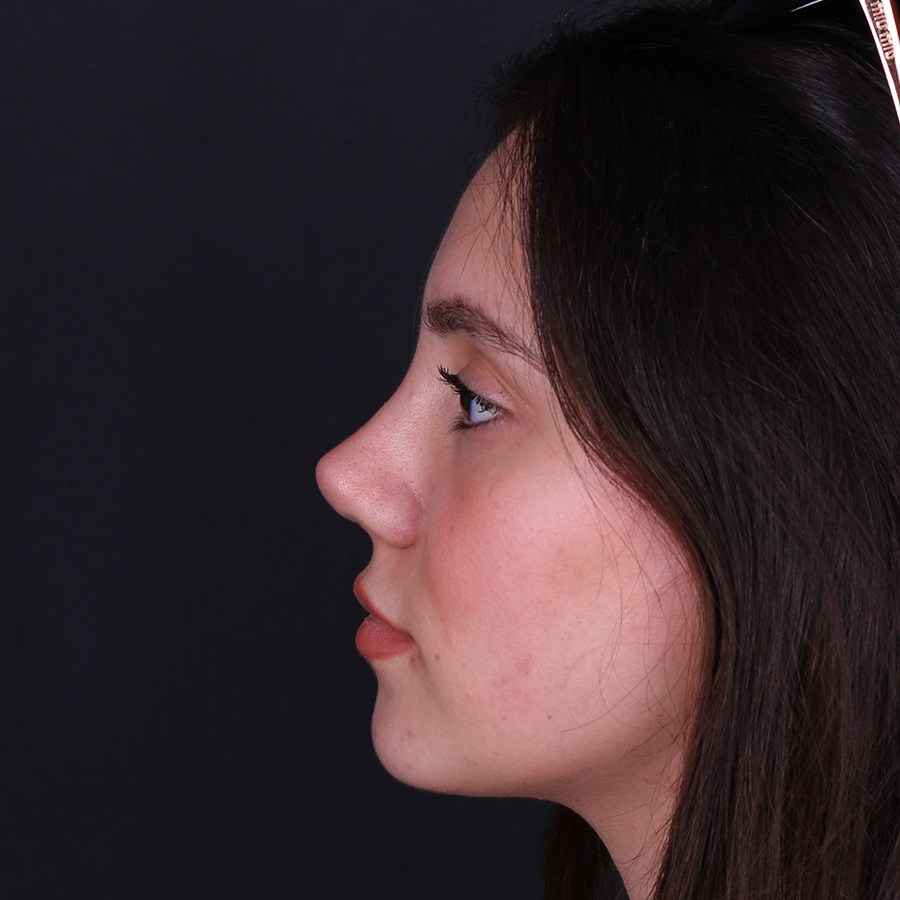
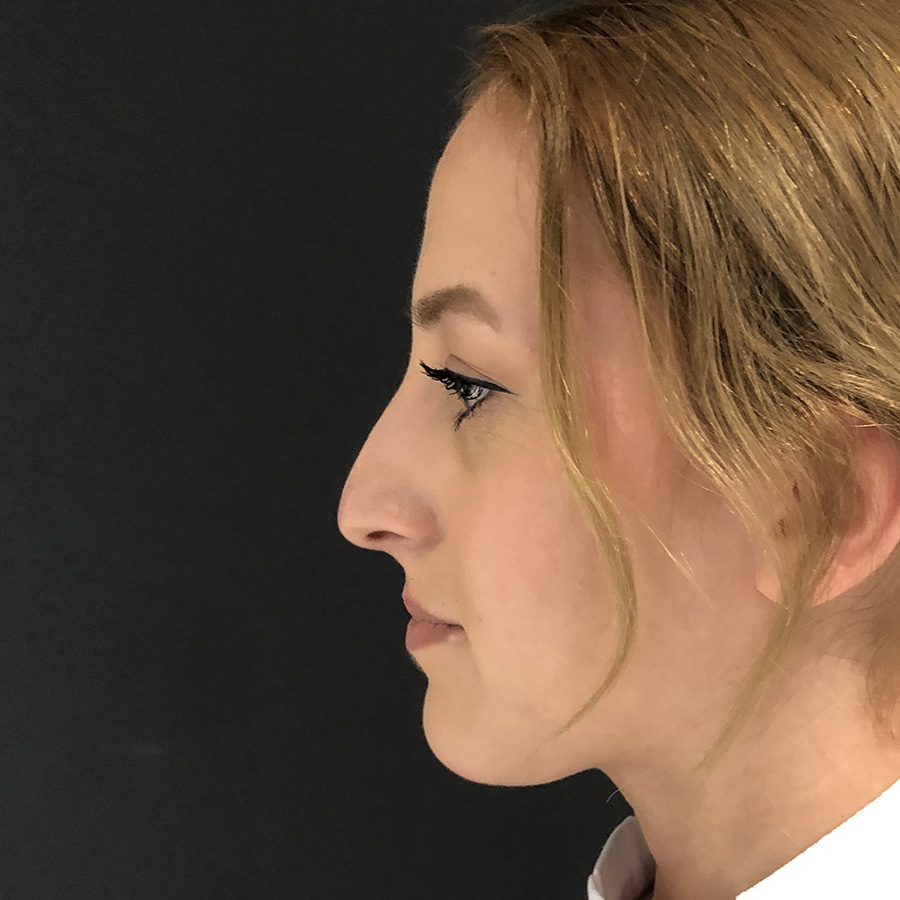
Real Patient Before & After Results


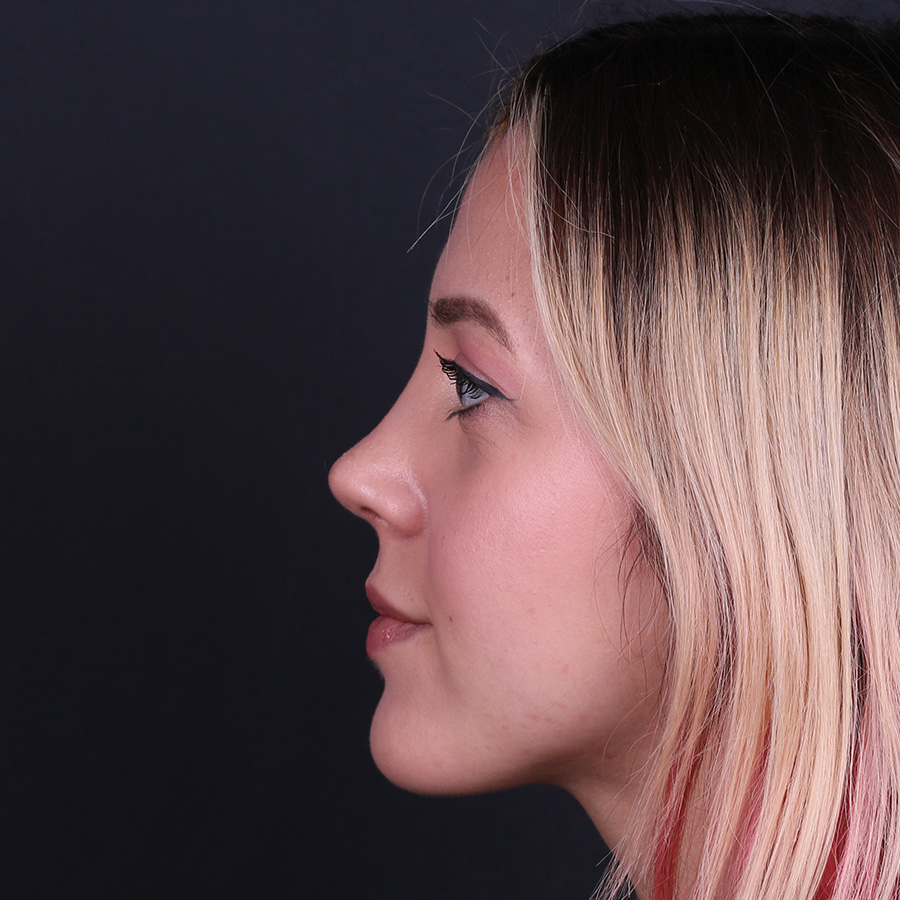
Considering chin augmentation?
A consultation can help determine what level of enhancement is appropriate for your facial structure and goals.
Pre Surgical Assessment
Before chin augmentation, a detailed assessment is performed, including:
- Facial proportions and profile analysis
- Chin projection and symmetry
- Dental bite and jaw alignment
- Skin and soft tissue characteristics
Clinical photographs may be used to support accurate planning and outcome evaluation.
Surgical Technique and Anaesthesia
Chin augmentation surgery typically takes around one hour.
In most cases, silicone chin implants are placed under general anaesthesia to ensure comfort and precision.
The implant may be inserted:
- Through an intraoral incision inside the mouth
- Through a small incision under the chin, hidden within the natural crease
In sliding genioplasty, the chin bone is surgically advanced forward to improve projection.
Scarring After Chin Augmentation
- Intraoral incisions result in no visible external scars
- When an incision is made under the chin, the scar is usually small and fades significantly within six months
- The incision is placed within the natural chin crease and is typically not noticeable
Recovery and Healing Process
Recovery after chin augmentation is generally fast and well tolerated.
Most patients experience:
- Mild pain and swelling during the first few days
- Significant reduction in swelling within 7 to 10 days
- Return to work and social activities within 5 to 7 days
Final results continue to settle over two to three months.
Chin Augmentation – Frequently Asked Questions
Chin augmentation (mentoplasty) is a cosmetic surgical procedure performed for patients whose chin is underdeveloped or positioned too far back in proportion to the rest of the face.
Chin augmentation can be performed using:
- Chin implants (silicone implants)
- Sliding genioplasty
- Dermal fillers (temporary)
In our practice, chin augmentation is most commonly performed using silicone chin implants, as they provide predictable and long lasting results.
Silicone implants are placed under general anaesthesia, either through an intraoral (inside the mouth) incision or a small incision under the chin.
In sliding genioplasty, the chin bone is surgically cut and advanced forward.
Ideal candidates include patients who:
- Have a receded or weak chin
- Have a small chin relative to facial proportions
- Have normal dental occlusion (bite)
- Wish to improve facial balance and profile harmony
The procedure typically takes around one hour.
We generally prefer to place chin implants under general anaesthesia to ensure maximum comfort and surgical precision.
- If the incision is made inside the mouth, there will be no visible scars
- If the incision is made under the chin, a small scar may be present, but it usually fades significantly after six months
Since the incision is hidden within the natural chin crease, it is generally not noticeable.
Recovery is generally fast and well tolerated.
- Mild pain and swelling may occur during the first few days
- Most swelling resolves within 7 to 10 days
- Patients usually return to work and social life within 5 to 7 days
- Final results may take 2 to 3 months to fully settle
Chin augmentation is a safe procedure with rare complications.
Possible risks include:
- Anaesthesia related risks
- Infection
- Haematoma
- Implant displacement
- Temporary numbness due to short term nerve irritation
- Asymmetry
These risks are uncommon when the procedure is performed by an experienced surgeon.
Yes, chin implant surgery provides permanent results.
Silicone implants are biocompatible materials designed to remain safely in the body for a lifetime and typically do not require replacement.
Yes. When a silicone implant is selected and positioned according to the individual needs of the face, the result is a natural, balanced and harmonious facial appearance.


Why Choose Us for Chin Augmentation

Expertise in facial proportions and balance
Dr Ali Alper Bayram applies detailed anatomical knowledge to ensure chin enhancement supports overall facial harmony.

Precise planning and surgical execution
Each procedure is planned individually, selecting the most appropriate technique to achieve a natural result.

Complete care and dedicated UK patient support
UK patients receive clear guidance, travel assistance and post operative follow up throughout their treatment journey.